

Depression doesn’t look the same for everyone. For some, it feels like fatigue and difficulty focusing. For others, it can make even simple daily responsibilities feel overwhelming. When symptoms start affecting how someone thinks, feels, and functions, the level of care matters.
Two of the most common structured mental health treatment options are the Partial Hospitalization Program (PHP) and the Intensive Outpatient Program (IOP). Both provide support outside of inpatient hospitalization, but they serve different needs.
Understanding PHP vs. IOP for depression can make it easier to decide what type of care fits your situation.
Understanding Depression
Depression, also known as major depressive disorder, can range from mild to severe, and symptoms often shift over time. Some people manage day-to-day life with moderate difficulty, while others experience severe symptoms that disrupt functioning entirely.
Depression may also occur alongside other conditions, such as post-traumatic stress disorder, substance use disorders, eating disorders, and other co-occurring disorders.
When symptoms are intense, structured mental health treatment options like PHP and IOP are often considered. The goal is to match the level of support to what the individual actually needs right now.
What Is a Partial Hospitalization Program (PHP)?
A partial hospitalization program is one of the most intensive forms of outpatient treatment. It is often used when someone needs more support than traditional therapy but does not require inpatient hospitalization.
A PHP program typically runs several hours per day, multiple days per week. The structure is consistent, which helps create stability during more difficult periods of recovery.
What PHP includes
A PHP usually involves psychiatric evaluations and medication management, individual therapy sessions, group therapy sessions, family therapy when appropriate, evidence-based therapies like CBT and DBT, and ongoing clinical assessment.
Because of this level of structure, PHP is considered a form of intensive treatment with close clinical oversight.
Who PHP is designed for
PHP is often appropriate for individuals experiencing moderate to severe depression symptoms, symptoms that are affecting daily functioning or make it difficult to manage daily routines, and those who show signs of an increased need for immediate intervention or are at risk of inpatient hospitalization
The focus is stabilization, and once symptoms improve, patients often step down into a lower level of care, like an IOP.
What Is an Intensive Outpatient Program (IOP)?
An intensive outpatient program provides structured support while allowing more independence in daily life. It is commonly used after PHP or inpatient care, but it can also be a starting point depending on symptoms.
An IOP program is typically scheduled a few days per week, with sessions lasting around three hours each.
What IOP includes
IOP services often include group therapy sessions, individual counseling, evidence-based therapies, coping skills development, relapse prevention strategies, and peer support.
A strong focus is placed on building real-world coping strategies and applying them outside of treatment.
Who IOP is designed for
An IOP for depression may be a good fit for individuals who have moderate symptoms, can manage daily responsibilities with support, have a stable home environment, need structured therapy without full-day programming, are continuing their recovery journey after higher care, and are becoming more stable
IOP supports independence while still offering a consistent therapeutic structure.
PHP vs IOP for Depression: Key Differences
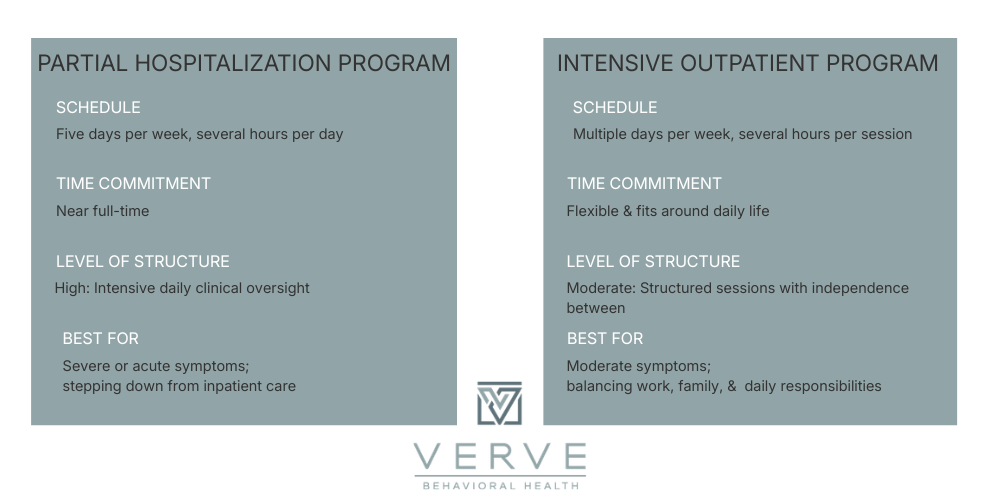
When comparing PHP vs. IOP for depression, the differences come down to structure, intensity, and time commitment.
PHP vs IOP for Depression: Level of intensity
PHP provides more structure and closer clinical supervision. It is designed for stabilization and more immediate support.
IOP is less intensive and focuses more on maintaining progress and building long-term coping strategies.
PHP vs IOP for Depression: Time commitment
PHP usually involves several hours of treatment per day, five days a week. It is highly structured and consistent.
IOP typically involves about three to five sessions per week, often around three hours per session, making it easier to balance with daily life.
PHP vs IOP for Depression: Clinical Support
PHP includes frequent psychiatric evaluations and medication management when needed. The clinical involvement is more hands-on.
IOP still provides access to mental health professionals, but the focus is more on therapy sessions and ongoing skill development.
PHP vs IOP for Depression: Treatment focus
PHP focuses on stabilization, symptom reduction, and crisis support when needed.
IOP focuses on recovery maintenance, relapse prevention, and strengthening coping skills.
How to Choose Between PHP and IOP for Depression
Deciding between PHP and IOP depends on symptoms, lifestyle, and the level of support needed.
Symptom severity
More severe symptoms or significant functional impairment may require PHP.
Moderate symptoms or improving stability may be better suited for IOP.
Daily responsibilities
If someone is struggling to maintain daily routines, PHP may provide the structure needed.
If someone can attend therapy while managing work or family responsibilities, IOP may be more appropriate.
Support needs
PHP provides comprehensive, day-long support with a multidisciplinary team.
IOP offers structured therapy while allowing more flexibility in daily life.
Treatment goals
Some individuals need immediate stabilization. Others are focused on maintaining progress and strengthening coping strategies over time.
A clinical assessment from a mental health professional is often the most important step in making this decision.
Benefits of PHP and IOP for Depression Recovery
Although PHP and IOP differ in time commitment and structure, both are evidence-based programs focused on helping individuals achieve lasting recovery. Participants receive consistent support, opportunities for personal growth, and practical tools that can be applied outside of treatment.
Coping skills and emotional regulation
A major focus in both programs is developing coping skills. Over time, individuals learn how to manage stress, identify triggers, and practice coping strategies in real-life situations.
Structured therapy and support
Regular therapy sessions help build consistency. Group therapy sessions also provide peer support, which can reduce isolation and strengthen motivation.
Improved daily functioning
As treatment progresses, many individuals notice improvements in daily routines, relationships, and overall functioning.
Relapse prevention and long-term support
Both programs emphasize relapse prevention and ongoing support, helping individuals maintain progress after structured treatment ends.
Choosing the Right Level of Care Matters
When comparing PHP vs. IOP for depression, the most important factor is matching treatment intensity to current needs. A PHP program offers more structure, more clinical oversight, and is often used when symptoms are more severe or disruptive, while an IOP program provides flexibility while still delivering consistent therapeutic support and skill-building.
At Verve Behavioral Health, we understand that no two recovery journeys look the same. Our PHP and IOP programs are designed to meet people where they are. If you’re unsure which level of care is right for you or someone you care about, reaching out can be the next step. Our team can help you understand your options and guide you toward a program that fits your needs, goals, and daily life.
